Your membership has expired

The payment for your account couldn't be processed or you've canceled your account with us.

Re-activate

Save products you love, products you own and much more!

Save products icon

Other Membership Benefits:

Savings icon Exclusive Deals for Members Best time to buy icon Best Time to Buy Products Recall tracker icon Recall & Safety Alerts TV screen optimizer icon TV Screen Optimizer and more
    GREEN CHOICE

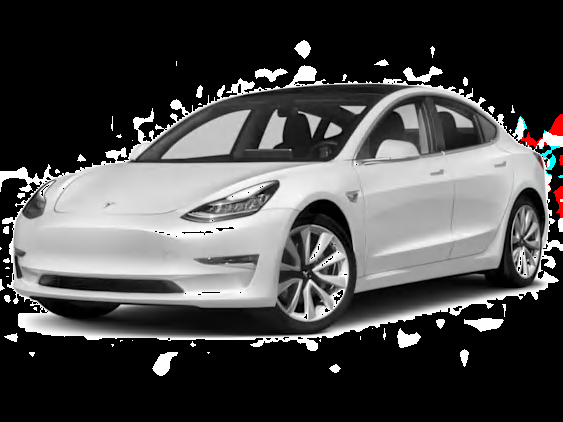
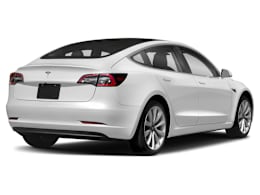
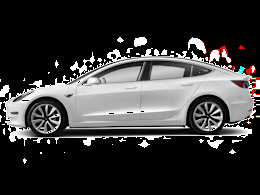
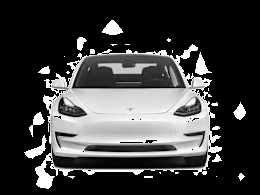
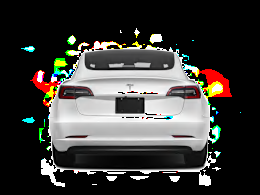
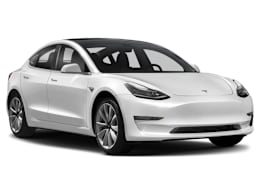
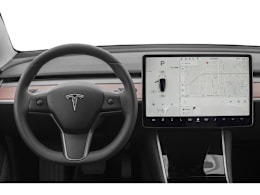
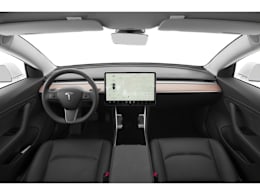
    Tesla Model 3

    EPA Range: 310 miles

    RECALL ALERT:
    There are 21 recalls on this vehicle. Learn More.

    Reliability

    Overall Reliability

    The 2019 Model 3 is less reliable than other cars from the same model year.

    The 2019 Tesla Model 3 has been recalled 21 times by NHTSA. View Recalls
    Most Common Trouble Spots
    Common Trouble Spot
    Common Trouble Spot

    Owner Reported Trouble Spots

    The Reliability score is based on our latest subscriber survey of 2019 Tesla Model 3 owners. The owner comments describe problems respondents experienced with this vehicle.

    Suspension/Steering

    Shocks or struts, ball joints, tie rods, wheel bearings, alignment, steering linkage (includes rack and pinion), power steering (pumps and hoses, leaks), wheel balance, springs or torsion bars, bushings, electronic or air suspension.

    What Owners Say

    Ball joints

    "Upper control arms and ball joints on front of car were very noisy due to a design flaw and needed replacing"

    Anonymous A., IL (2019 Tesla Model 3 Long Range Electric)
    Bushings

    "I had to have both the upper and lower control arms replaced at a cost of $2,100. The were making grinding noises."

    Anonymous, (2019 Tesla Model 3 Long Range Electric)

    ""Bushings were torn and loose after just 50,000 miles. Replacement of the lower control arm and compliance link were required as they're not repairable parts. This failure seems premature compared to other vehicles, likely due to the vehicle's 2-ton weight vs softness for ride quality. Replaced both with aftermarket parts.""

    Anonymous, AZ (2019 Tesla Model 3 Long Range Electric)
    Other steering/suspension problem

    ""It is disappointing that the upper and lowe control arms needed replacement at this mileage, especially so since it is the second time the uper control arms needed replacement. The first time was under warranty. This time it was not""

    Anonymous A., TX (2019 Tesla Model 3 Performance Electric)
    Shocks or struts

    "Pivot bearing , left front strut went out replaced by Tesla for 250 dollars. Fine now."

    Anonymous, CA (2019 Tesla Model 3 Standard Electric)
    Tie rods

    "The car would make a noise when turning. Tesla acknowledged having problems with the part they replaced -- at $1600 out-of-pocket cost to me!"

    Anonymous, MN (2019 Tesla Model 3 Long Range Electric)

    "Car started creaking. Tesla dealer said basically the entire suspension needed to be replaced. $3000"

    Anonymous A., VA (2019 Tesla Model 3 Long Range Electric)

    In-car Electronics

    Infotainment system (audio, GPS, phone), rear entertainment system, backup or other camera/sensors, head-up display.

    What Owners Say

    Display screen goes blank

    "Went blank while driving to another city in NC. Came back later after I restarted it several times."

    Anonymous, NC (2019 Tesla Model 3 Long Range Electric)
    Hardware replacement

    "Replaced computer cost approx $2000"

    Anonymous, CA (2019 Tesla Model 3 Performance Electric)
    Speakers

    "Problem is intermittent but never repaired even though the car was taken to an actual Tesla Repair facility. Tech warrantee company also a useless waste of my money ."

    Anonymous, NY (2019 Tesla Model 3 Performance Electric)
    Voice control commands

    ""An intermittent reoccurring, periodic problem. Issue : very loud clicking noise from the audio system and at the same time, the car fails to understand voice commands. Most annoying : tech warrantee company refused to cover the cost pf repair. Also disturbing : Tesla repair facility did not know how to diagnose and fix this issue.""

    Anonymous, NY (2019 Tesla Model 3 Performance Electric)

    Climate System

    AC compressor, blower (fan) motor, condenser, evaporator, heater system, automatic climate system, electrical failure, refrigerant leakage.

    What Owners Say

    Heater system

    "heater stopped working and was 750 Canadian Dollars for part and about the same for the labour. Really needed it because we could not warm the cabin up anymore and it was winter."

    Anonymous, BC (2019 Tesla Model 3 Mid Range Electric)

    "heat stopped working suddenly. Required dealer repair"

    Anonymous, NY (2019 Tesla Model 3 Long Range Electric)

    "Cabin heater had to be replaced."

    Anonymous, NH (2019 Tesla Model 3 Long Range Electric)
    Refrigerant leaks

    ""AC stopped working early September. Could not get a service appointment until mid November. They had just fired a large fraction of service employees, plus they closed at least one Houston service center. No local repair shops can work on Tesla, other than tires. They said Tesla refuses to sell parts, and they refuse to train others. When I finally got to an appointment, Tesla employees clearly had low morale. The fix was a minor hose leak, but it cost $852. Their Tesla-only repair strategy may have made sense when the technology was new. Now it is unsustainable. For Tesla to be satisfied with a customer to drive in a city as hot as Houston without another repair option means they are not a business I could ever buy from again.""

    Anonymous, TX (2019 Tesla Model 3 Long Range Electric)

    Body Hardware

    Windows, locks and latches, doors or sliding doors, tailgate, trunk or hatch, mirrors, seat controls (power or manual), seat belts, sunroof, convertible top, glass defect.

    What Owners Say

    Door handle

    ""The door handles are chrome plated and it peels. I cut my finger on it. Subsequently, I detected that another door handle was beginning to peel and I was able to file it down a bit so that it would not cut me.""

    Anonymous, NY (2019 Tesla Model 3 Long Range Electric)
    Glass defects

    ""Rear defroster stopped working, entire new rear glass replaced, which is ridiculous given age of the car!""

    Anonymous, ON (2019 Tesla Model 3 Standard Electric)
    Other body problem

    "Air bag on right front passenger side needs replacement. Not covered under warranty? How is this not a safety issue requiring Tesla to replace?"

    Anonymous, ON (2019 Tesla Model 3 Standard Electric)

    Electrical Accessories

    Cruise control, clock, warning lights, body control module, keyless entry, wiper motor or washer, tire pressure monitor, interior or exterior lights, horn, gauges, 12V power plug, USB ports, alarm or security system, remote engine start, heated or cooled seats, heated steering wheel, headlights, automatic headlights, automatic wipers, wireless charging pad.

    What Owners Say

    12V battery

    "Replaced"

    Anonymous, NV (2019 Tesla Model 3 Long Range Electric)

    "A warning message is provided about the battery needed to be replaced."

    Anonymous, CA (2019 Tesla Model 3 Standard Electric)
    Other electrical system problem

    "It appears to be the 'super bottle'. It is waiting for a part."

    Anonymous, FL (2019 Tesla Model 3 Long Range Electric)

    Noises/Leaks

    Squeaks, rattles, wind noises, seals and/or weather stripping, air and water leaks.

    What Owners Say

    Seals and/or weather-stripping

    ""During heavy rain, the rear trunk and well would be very wet. After a year of close observation, the problem was described to Tesla technicians in Sept 2024, who recreated the leak, sealed joints and sheet metal connections. No problem since.""

    Anonymous, VT (2019 Tesla Model 3 Standard Electric)
    Squeaks or rattles

    "Squeak in front of car was related to the other problem I reported, namely the front suspension (upper control arms & ball joints)."

    Anonymous A., IL (2019 Tesla Model 3 Long Range Electric)

    Paint/Trim

    Paint (fading, chalking, peeling, or cracking), loose interior or exterior trim or moldings, rust.

    What Owners Say

    Loose interior trim or moldings

    "Came loose when pulling seat belt"

    Anonymous A., AZ (2019 Tesla Model 3 Long Range Electric)
    Paint (fading, chalking, cracking, or peeling)

    ""Pealing paint at back of front wheel wells, which turns into rust. Tesla wont fix it""

    Anonymous, NH (2019 Tesla Model 3 Long Range Electric)

    EV Battery

    Electric/hybrid battery pack failure, replacement or malfunction, or cooling.

    What Owners Say

    Other electric/hybrid battery problem

    ""I am finding that range is decreasing at a rate faster than anticipated. When new, posted range was 310 miles. That has decreased to about 270 now, with 'phantom loss' (discharge while idle) consuming another 14% on average""

    Anonymous A., NY (2019 Tesla Model 3 Long Range Electric)

    EV Charging

    Won't charge at home; won't work with some public chargers; won't fully charge; charge connection; charge port door.

    What Owners Say

    Charging port problem

    "Had an issue with not being able to charge. Had to have charge port and some wiring replaced."

    Anonymous A., CA (2019 Tesla Model 3 Standard Electric)

    Drive System

    Driveshaft or axle, CV joint, differential, transfer case, four-wheel-drive/all-wheel-drive components, driveline vibration, electrical failure, traction control, electronic stability control.

    What Owners Say

    Other driveline problem

    ""The control arms were replaced for the second time in two years. The first time, the Tesla was under warranty. The second time it was just out of warranty period.""

    Anonymous, NY (2019 Tesla Model 3 Long Range Electric)

    Brakes

    Premature pad/rotor wear, pulsation or vibration, antilock system, parking brake, master cylinder, calipers, squeaking, brake failure, regenerative braking.

    2019 Sedans & Hatchbacks Reliability

    This Car
    vs. Similar Cars

    Tesla vs. Other New Car Brands Reliability

    Reliability History
    * Redesign year
    00
    01
    02
    03
    04
    05
    06
    07
    08
    09
    10
    11
    12
    13
    14
    15
    16
    17*
    18
    19
    20
    21
    22
    23
    24
    25
    Overall Reliability Verdict

    POTENTIAL TROUBLE SPOTS
    Powertrain
    NA
    Electric Motor
    NA
    EV Battery
    NA
    EV Charging
    NA
    Drive System
    NA
    Suspension/Steering
    NA
    Brakes
    NA
    Climate System
    NA
    Build Quality
    NA
    Electrical Accessories
    NA
    Body Hardware
    NA
    Paint/Trim
    NA
    Noises/Leaks
    NA
    In-car Electronics
    NA
    Reliability indicates how models have performed in the past, providing the basis for predicting how the vehicles will hold up in the year ahead. These charts provide the most comprehensive reliability information available to consumers. Based on information received from our latest subscriber survey for about 380,000 vehicles, our reliability history charts give you a rundown on how 2000 through 2025 vehicles are holding up in 20 potential trouble spots, ranging from the engine, transmission, electric motor, EV charging, and brakes, to power equipment and the electrical accessories.
    Recalls
    PROVIDED BY
    TIRES
    Dec 17, 2024
    Driving with improperly inflated tires increases the risk of a crash.
    Summary:
    Tesla, Inc. (Tesla) is recalling certain 2024 Cybertruck, 2017-2025 Model 3, and 2020-2025 Model Y vehicles. The tire pressure monitoring system (TPMS) warning light may not remain illuminated between drive cycles, failing to warn the driver of low tire pressure. As such, these vehicles fail to comply with the requirements of Federal Motor Vehicle Safety Standard number 138, "Tire Pressure Monitoring Systems."
    What should you do:
    Tesla released an over-the-air (OTA) software update, free of charge. Owner notification letters were mailed February 15, 2025. Owners may contact Tesla customer service at 1-877-798-3752. Tesla's number for this recall is SB-24-00-018.
    For more information:
    Owners may also contact the National Highway Traffic Safety Administration Vehicle Safety Hotline at 1-888-327-4236 (TTY 1-800-424-9153), or go to www.nhtsa.gov.
    NHTSA CAMPAIGN ID Number: 24V935000
    Potential Number of Units Affected: 696281
    SEAT BELTS
    May 28, 2024
    A seat belt warning system that fails to alert occupants of an unbelted seat belt can increase the risk of injury during a crash.
    Summary:
    Tesla, Inc. (Tesla) is recalling certain 2012-2024 Model S, 2015-2024 Model X, 2017-2023 Model 3, and 2020-2023 Model Y vehicles. In the event of an unbelted driver, the seat belt warning light and audible chime may not activate as intended. As such, these vehicles fail to comply with the requirements of Federal Motor Vehicle Safety Standard number 208, "Occupant Crash Protection."
    What should you do:
    Tesla will release an over-the-air (OTA) software update. Owner notification letters were mailed July 26, 2024. Owners may contact Tesla customer service at 1-877-798-3752. Tesla's number for this recall is SB-24-00-008.
    For more information:
    Owners may also contact the National Highway Traffic Safety Administration Vehicle Safety Hotline at 1-888-327-4236 (TTY 1-800-424-9153), or go to www.nhtsa.gov.
    NHTSA CAMPAIGN ID Number: 24V376000
    Potential Number of Units Affected: 125233
    ELECTRICAL SYSTEM, FORWARD COLLISION AVOIDANCE
    Feb 27, 2024
    Pedestrians may be unaware of an approaching vehicle if the PWS sounds are muted, increasing the risk of a crash.
    Summary:
    Tesla, Inc. (Tesla) is recalling certain 2013, 2018-2021 Model S, 2020-2021 Model X, 2018-2022 Model 3, and 2020-2022 Model Y vehicles. A factory reset muted the Pedestrian Warning System (PWS) sounds. As such, these vehicles fail to comply with the requirements of Federal Motor Vehicle Safety Standard number 141, "Minimum Sound Requirements for Hybrid and Electric Vehicles."
    What should you do:
    Tesla released an over-the-air (OTA) software update, release 2023.44.30.14, free of charge. Owner notification letters were mailed April 27, 2024. Owners may contact Tesla customer service at 1-877-798-3752. Tesla's number for this recall is SB-24-00-006.
    For more information:
    Owners may also contact the National Highway Traffic Safety Administration Vehicle Safety Hotline at 1-888-327-4236 (TTY 1-800-424-9153), or go to www.nhtsa.gov.
    NHTSA CAMPAIGN ID Number: 24V153000
    Potential Number of Units Affected: 6557
    ELECTRICAL SYSTEM
    Jan 30, 2024
    Warning lights with a smaller font size can make critical safety information on the instrument panel difficult to read, increasing the risk of a crash.
    Summary:
    Tesla, Inc. (Tesla) is recalling certain 2012-2023 Model S, 2016-2024 Model X, 2017-2023 Model 3, 2019-2024 Model Y, and 2024 Cybertruck vehicles. An incorrect font size is displayed on the instrument panel for the Brake, Park, and Antilock Brake System (ABS) warning lights. As such, these vehicles fail to comply with the requirements of Federal Motor Vehicle Safety Standard number 105, "Hydraulic and Electric Brake Systems" and 135, "Light Vehicle Brake Systems."
    What should you do:
    Tesla began releasing an over-the-air (OTA) software update, free of charge. Owners may contact Tesla customer service at 1-877-798-3752. Tesla's number for this recall is SB-24-00-003.
    For more information:
    Owners may also contact the National Highway Traffic Safety Administration Vehicle Safety Hotline at 1-888-327-4236 (TTY 1-800-424-9153), or go to www.nhtsa.gov.
    NHTSA CAMPAIGN ID Number: 24V051000
    Potential Number of Units Affected: 2193869
    ELECTRICAL SYSTEM
    Dec 12, 2023
    In certain circumstances when Autosteer is engaged, and the driver does not maintain responsibility for vehicle operation and is unprepared to intervene as necessary or fails to recognize when Autosteer is canceled or not engaged, there may be an increased risk of a crash.
    Summary:
    Tesla, Inc. (Tesla) is recalling 2012-2023 Model S, 2016-2023 Model X, 2017-2023 Model 3, and 2020-2023 Model Y vehicles equipped with all versions of Autosteer leading up to the version(s) that contains the recall remedy. In certain circumstances when Autosteer is engaged, the prominence and scope of the feature's controls may not be sufficient to prevent driver misuse of the SAE Level 2 advanced driver-assistance feature.
    What should you do:
    Tesla will release an over-the-air (OTA) software update, free of charge. Owner notification letters were mailed February 10, 2024. Owners may contact Tesla customer service at 1-877-798-3752. Tesla's number for this recall is SB-23-00-008.
    For more information:
    Owners may also contact the National Highway Traffic Safety Administration Vehicle Safety Hotline at 1-888-327-4236 (TTY 1-800-424-9153), or go to www.nhtsa.gov.
    NHTSA CAMPAIGN ID Number: 23V838000
    Potential Number of Units Affected: 2031220
    SUSPENSION
    Mar 31, 2023
    A lateral link separation could shift the wheel alignment, causing instability and increasing the risk of a crash.
    Summary:
    Tesla, Inc. (Tesla) is recalling certain 2018-2019 Model 3 vehicles. The front suspension lateral link fasteners may loosen, allowing the lateral link to separate from the sub-frame.
    What should you do:
    Tesla Service will tighten or replace the lateral link fasteners as necessary, free of charge. Owner notification letters were mailed May 30, 2023. Owners may contact Tesla customer service at 1-877-798-3752. Tesla's number for this recall is SB-23-31-001. This recall is an expansion of previous recall number 21V-835.
    For more information:
    Owners may also contact the National Highway Traffic Safety Administration Vehicle Safety Hotline at 1-888-327-4236 (TTY 1-800-424-9153), or go to www.nhtsa.gov.
    NHTSA CAMPAIGN ID Number: 23V235000
    Potential Number of Units Affected: 422
    STEERING
    Feb 15, 2023
    FSD Beta software that allows a vehicle to exceed speed limits or travel through intersections in an unlawful or unpredictable manner increases the risk of a crash.
    Summary:
    Tesla, Inc. (Tesla) is recalling certain 2016-2023 Model S, Model X, 2017-2023 Model 3, and 2020-2023 Model Y vehicles equipped with Full Self-Driving Beta (FSD Beta) software or pending installation.¿¿ The FSD Beta system may allow the vehicle to act unsafe around intersections, such as traveling straight through an intersection while in a turn-only lane, entering a stop sign-controlled intersection without coming to a complete stop, or proceeding into an intersection during a steady yellow traffic signal without due caution. In addition, the system may respond insufficiently to changes in posted speed limits or not adequately account for the driver's adjustment of the vehicle's speed to exceed posted speed limits.
    What should you do:
    Tesla will release an over-the-air (OTA) software update, free of charge.¿¿ Owner notification letters were mailed April 15, 2023.¿¿ Owners may contact Tesla customer service at 1-877-798-3752.¿¿ Tesla's number for this recall is SB-23-00-001.
    For more information:
    Owners may also contact the National Highway Traffic Safety Administration Vehicle Safety Hotline at 1-888-327-4236 (TTY 1-800-424-9153), or go to www.nhtsa.gov.
    NHTSA CAMPAIGN ID Number: 23V085000
    Potential Number of Units Affected: 362758
    SEAT BELTS
    Oct 21, 2022
    An incorrectly reassembled seat belt anchor can impair the performance of the seat belt during a crash, increasing the risk of injury.
    Summary:
    Tesla, Inc. (Tesla) is recalling certain 2017-2022 Model 3 vehicles. The second-row left seat belt buckle and second-row center seat belt anchor may have been incorrectly reassembled during vehicle service.
    What should you do:
    Tesla Service will inspect and reassemble the seat belt anchors as necessary, free of charge. Owner notification letters were mailed December 20, 2022. Owners may contact Tesla customer service at 1-877-798-3752. Tesla's number for this recall is SB-22-20-004.
    For more information:
    Owners may also contact the National Highway Traffic Safety Administration Vehicle Safety Hotline at 1-888-327-4236 (TTY 1-800-424-9153), or go to www.nhtsa.gov.
    NHTSA CAMPAIGN ID Number: 22V798000
    Potential Number of Units Affected: 24064
    VISIBILITY
    Sep 19, 2022
    A closing window may exert excessive force by pinching a driver or passenger before retracting, increasing the risk of injury.
    Summary:
    Tesla, Inc. (Tesla) is recalling certain 2017-2022 Model 3, 2020-2022 Model Y, and 2021-2022 Model S and Model X vehicles. The window automatic reversal system may not react correctly after detecting an obstruction. As such, these vehicles fail to comply with the requirements of Federal Motor Vehicle Safety Standard number 118, "Power-Operated Window Systems."
    What should you do:
    Tesla will perform an over-the-air (OTA) software update of the automatic window reversal system, free of charge. Owner notification letters were mailed March 31, 2032. Owners may contact Tesla customer service at 1-877-798-3752. Tesla's number for this recall is SB-22-00-013.
    For more information:
    Owners may also contact the National Highway Traffic Safety Administration Vehicle Safety Hotline at 1-888-327-4236 (TTY 1-800-424-9153), or go to www.nhtsa.gov.
    NHTSA CAMPAIGN ID Number: 22V702000
    Potential Number of Units Affected: 1096762
    ELECTRICAL SYSTEM
    Apr 18, 2022
    The driver may not know how fast the vehicle is traveling without the mph or km/h unit display, increasing the risk of a crash.
    Summary:
    Tesla, Inc. (Tesla) is recalling certain 2018-2022 Model 3 Performance vehicles. The unit of speed (mph or km/h) may fail to display on the speedometer while in Track Mode. As such, these vehicles fail to comply with the requirements of Federal Motor Vehicle Safety Standard number 101, "Control and Displays."
    What should you do:
    Tesla will perform an over-the-air (OTA) software update, free of charge. Owner notification letters were mailed June 17, 2022. Owners may contact Tesla customer service at 1-877-798-3752. Tesla's number for this recall is SB-22-00-008.
    For more information:
    Owners may also contact the National Highway Traffic Safety Administration Vehicle Safety Hotline at 1-888-327-4236 (TTY 1-800-424-9153), or go to www.nhtsa.gov.
    NHTSA CAMPAIGN ID Number: 22V263000
    Potential Number of Units Affected: 48184
    ELECTRICAL SYSTEM, FORWARD COLLISION AVOIDANCE
    Apr 12, 2022
    Pedestrians may be unaware of an approaching vehicle if the PWS sounds are obscured, increasing the risk of a crash.
    Summary:
    Tesla, Inc. (Tesla) is recalling certain 2020-2022 Model Y, Model X, Model S, and 2017-2022 Model 3 vehicles. The Boombox function allows sounds to be played through an external speaker while the vehicle is in motion, which may obscure the Pedestrian Warning System (PWS) sounds. As such, these vehicles fail to comply with the requirements of Federal Motor Vehicle Safety Standard number 141, "Minimum Sound Requirements for Hybrid and Electric Vehicles."
    What should you do:
    Tesla will perform an over-the-air (OTA) software update that will disable the Boombox functionality when the vehicle is in Drive, Neutral and Reverse modes, including Summon and Smart Summon, free of charge. Owner notification letters were mailed June 6, 2022. Owners may contact Tesla customer service at 1-877-798-3752. Tesla's number for this recall is SB-22-00-003. Note: This recall supersedes recall 22V-063. Vehicles configured with Summon or Smart Summon and already remedied under 22V-063 will need to have the new remedy software installed.
    For more information:
    Owners may also contact the National Highway Traffic Safety Administration Vehicle Safety Hotline at 1-888-327-4236 (TTY 1-800-424-9153), or go to www.nhtsa.gov.
    NHTSA CAMPAIGN ID Number: 22V235000
    Potential Number of Units Affected: 594894
    BACK OVER PREVENTION
    Mar 18, 2022
    A delayed rearview camera image reduces the driver's rear view, increasing the risk of a crash.
    Summary:
    Tesla, Inc. (Tesla) is recalling certain 2018-2019 Model S, Model X, and 2017-2020 Model 3 vehicles equipped with Autopilot Computer 2.5 and operating certain firmware releases. The rearview image may not immediately display when the vehicle begins to reverse. As such, these vehicles fail to comply with the requirements of Federal Motor Vehicle Safety Standard number 111, "Rear Visibility."
    What should you do:
    Tesla will perform an over-the-air (OTA) software update, free of charge. Owner notification letters were mailed May 17, 2022. Owners may contact Tesla customer service at 1-877-798-3752. Tesla's number for this recall is SB-22-00-004.
    For more information:
    Owners may also contact the National Highway Traffic Safety Administration Vehicle Safety Hotline at 1-888-327-4236 (TTY 1-800-424-9153), or go to www.nhtsa.gov.
    NHTSA CAMPAIGN ID Number: 22V169000
    Potential Number of Units Affected: 947
    ELECTRICAL SYSTEM, FORWARD COLLISION AVOIDANCE
    Feb 04, 2022
    Pedestrians may be unaware of an approaching vehicle if the PWS sounds are obscured, increasing the risk of a crash.
    Summary:
    Tesla, Inc. (Tesla) is recalling certain 2020-2022 Model S, Model X, Model Y, and 2017-2022 Model 3 vehicles. The Boombox function allows sounds to be played through an external speaker while the vehicle is in motion, which may obscure the Pedestrian Warning System (PWS) sounds. As such, these vehicles fail to comply with the requirements of Federal Motor Vehicle Safety Standard number 141, "Minimum Sound Requirements for Hybrid and Electric Vehicles."
    What should you do:
    Tesla will perform an over-the-air (OTA) software update that will disable the Boombox functionality when the vehicle is in Drive, Neutral and Reverse modes, free of charge. Owner notification letters are expected to be mailed April 5, 2022. Owners may contact Tesla customer service at 1-877-798-3752. Tesla's number for this recall is SB-22-00-003. Note: This recall has been superseded by Recall 22V-235. Tesla's number for the new recall is SB-22-00-003.
    For more information:
    Owners may also contact the National Highway Traffic Safety Administration Vehicle Safety Hotline at 1-888-327-4236 (TTY 1-800-424-9153), or go to www.nhtsa.gov.
    NHTSA CAMPAIGN ID Number: 22V063000
    Potential Number of Units Affected: 578607
    ELECTRICAL SYSTEM, SEAT BELTS
    Feb 01, 2022
    The driver may be unaware that their seat belt is not fastened, increasing the risk of injury during a crash.
    Summary:
    Tesla, Inc. (Tesla) is recalling certain 2021-2022 Model S and Model X, 2017-2022 Model 3, and 2020-2022 Model Y vehicles. The audible chime may not activate when the vehicle starts and the driver has not buckled their seat belt. As such, these vehicles fail to comply with the requirements of Federal Motor Vehicle Safety Standard number 208, "Occupant Crash Protection."
    What should you do:
    Tesla will perform an over-the-air (OTA) software update, free of charge. Owner notification letters were mailed April 1, 2022. Owners may contact Tesla customer service at 1-877-798-3752. Tesla's number for this recall is SB-22-00-002.
    For more information:
    Owners may also contact the National Highway Traffic Safety Administration Vehicle Safety Hotline at 1-888-327-4236 (TTY 1-800-424-9153), or go to www.nhtsa.gov.
    NHTSA CAMPAIGN ID Number: 22V045000
    Potential Number of Units Affected: 817143
    STEERING
    Jan 27, 2022
    Failing to stop at a stop sign can increase the risk of a crash.
    Summary:
    Tesla, Inc. (Tesla) is recalling certain 2016-2022 Model S and Model X, 2017-2022 Model 3, and 2020-2022 Model Y vehicles. The "rolling stop" functionality available as part of the Full Self-Driving (Beta) software may allow the vehicle to travel through an all-way stop intersection without first coming to a stop.
    What should you do:
    Tesla will perform an over-the-air (OTA) software update that disables the "rolling stop" functionality, free of charge. Owner notification letters were mailed March 28, 2022. Owners may contact Tesla customer service at 1-877-798-3752. Tesla's number for this recall is SB-22-00-001.
    For more information:
    Owners may also contact the National Highway Traffic Safety Administration Vehicle Safety Hotline at 1-888-327-4236 (TTY 1-800-424-9153), or go to www.nhtsa.gov.
    NHTSA CAMPAIGN ID Number: 22V037000
    Potential Number of Units Affected: 53822
    BACK OVER PREVENTION, ELECTRICAL SYSTEM, VISIBILITY
    Dec 21, 2021
    A rearview camera that does not function reduces the driver's rear view, increasing the risk of a crash.
    Summary:
    Tesla, Inc. (Tesla) is recalling all 2017-2020 Model 3 vehicles. The rearview camera cable harness may be damaged by the opening and closing of the trunk lid, preventing the rearview camera image from displaying.
    What should you do:
    Tesla Service will inspect and install a guide protector and new cable harness as necessary, free of charge. Owner notification letters were mailed April 24, 2022. Owners may contact Tesla customer service at 1-877-798-3752. Tesla's number for this recall is SB-21-17-008.
    For more information:
    Owners may also contact the National Highway Traffic Safety Administration Vehicle Safety Hotline at 1-888-327-4236 (TTY 1-800-424-9153), or go to www.nhtsa.gov.
    NHTSA CAMPAIGN ID Number: 21V00D000
    Potential Number of Units Affected: 356309
    FORWARD COLLISION AVOIDANCE
    Oct 29, 2021
    Unexpected activation of the AEB system may cause the car to stop suddenly, increasing the risk of a crash.
    Summary:
    Tesla, Inc. (Tesla) is recalling certain 2017-2021 Model S, Model 3, Model X, and 2020-2021 Model Y vehicles operating software version 2021.36.5.2. A communication error may cause false forward-collision warning (FCW) or unexpected activation of the automatic emergency brake (AEB) system.
    What should you do:
    Tesla Service has released an over-the-air (OTA) software update, free of charge. The recall began October 25, 2021. Owners may contact Tesla customer service at 1-877-798-3752. Tesla's number for this recall is SB-21-00-004.
    For more information:
    Owners may also contact the National Highway Traffic Safety Administration Vehicle Safety Hotline at 1-888-327-4236 (TTY 1-800-424-9153), or go to www.nhtsa.gov.
    NHTSA CAMPAIGN ID Number: 21V846000
    Potential Number of Units Affected: 11728
    SUSPENSION
    Oct 25, 2021
    A lateral link separation could shift the wheel alignment, causing instability and increasing the risk of a crash.
    Summary:
    Tesla, Inc. (Tesla) is recalling certain 2020-2021 Model Y and 2019-2021 Model 3 vehicles. The front suspension lateral link fasteners may loosen, allowing the lateral link to separate from the sub-frame.
    What should you do:
    Tesla Service will tighten or replace the lateral link fasteners as necessary, free of charge. Owner notification letters were mailed December 20, 2021. Owners may contact Tesla customer service at 1-877-798-3752. Tesla's number for this recall is SB-21-31-003.
    For more information:
    Owners may also contact the National Highway Traffic Safety Administration Vehicle Safety Hotline at 1-888-327-4236 (TTY 1-800-424-9153), or go to www.nhtsa.gov.
    NHTSA CAMPAIGN ID Number: 21V835000
    Potential Number of Units Affected: 2791
    SERVICE BRAKES, HYDRAULIC
    May 25, 2021
    Contact with the rim may cause a loss of tire pressure, increasing the risk of a crash.
    Summary:
    Tesla, Inc. (Tesla) is recalling certain 2019-2021 Model 3 and 2020-2021 Model Y vehicles. The brake caliper bolts may be loose, allowing the brake caliper to separate and contact the wheel rim.
    What should you do:
    Tesla Service will inspect and tighten, or replace the caliper bolts as necessary, free of charge. Owner notification letters were mailed July 23, 2021. Owners may contact Tesla customer service online by visiting www.tesla.com/support/contact or by calling 1-877-79-TESLA (or 1-877-798-3752). Tesla's number for this recall is SB-21-33-002.
    For more information:
    Owners may also contact the National Highway Traffic Safety Administration Vehicle Safety Hotline at 1-888-327-4236 (TTY 1-800-424-9153), or go to www.safercar.gov.
    NHTSA CAMPAIGN ID Number: 21V387000
    Potential Number of Units Affected: 5974
    SEAT BELTS
    May 25, 2021
    An improperly attached fastener may prevent the seat belt system from performing as designed, increasing the risk of injury.
    Summary:
    Tesla, Inc. (Tesla) is recalling certain 2018-2020 Model 3 and 2019-2021 Model Y vehicles. One or both fasteners that secure the front seat shoulder belt to the b-pillar may not be properly attached.
    What should you do:
    Tesla Service will inspect and repair both fasteners if necessary, free of charge. Owner notification letters were mailed July 23, 2021. Owners may contact Tesla customer service online by visiting www.tesla.com/support/contact or by calling 1-877-79-TESLA (or 1-877-798-3752). Tesla's number for this recall is SB-21-20-001.
    For more information:
    Owners may also contact the National Highway Traffic Safety Administration Vehicle Safety Hotline at 1-888-327-4236 (TTY 1-800-424-9153), or go to www.safercar.gov.
    NHTSA CAMPAIGN ID Number: 21V389000
    Potential Number of Units Affected: 5530
    EQUIPMENT
    Oct 10, 2019
    Failure to provide the air bag warning information increases the risk of injury.
    Summary:
    Tesla Motors, Inc. (Tesla) is recalling certain 2019 Tesla Model 3 vehicles. The driver-side sun visor may not have the required air bag warning information. As such, these vehicles fail to comply with the requirements of Federal Motor Vehicle Safety Standard (FMVSS) number 208, "Occupant Crash Protection."
    What should you do:
    Tesla will notify owners, and Tesla Service Centers will inspect the visor and replace it, as necessary, free of charge. The recall began December 6, 2019. Owners may contact Tesla customer service at 1-877-798-3752. Tesla's number for this recall is SB-19-15-003.
    For more information:
    Owners may also contact the National Highway Traffic Safety Administration Vehicle Safety Hotline at 1-888-327-4236 (TTY 1-800-424-9153), or go to www.safercar.gov.
    NHTSA CAMPAIGN ID Number: 19V719000
    Potential Number of Units Affected: 89
    Check Vehicle for Unrepaired Recalls
    Enter a valid 17-character VIN
    Enter a valid 17-character VIN
    Change Vehicle