

Your membership has expired

The payment for your account couldn't be processed or you've canceled your account with us.

Re-activate

Save products you love, products you own and much more!

Save products icon

Other Membership Benefits:

Savings icon Exclusive Deals for Members Best time to buy icon Best Time to Buy Products Recall tracker icon Recall & Safety Alerts TV screen optimizer icon TV Screen Optimizer and more
    2026

    Toyota RAV4 Plug-in Hybrid

    EPA Range: 52 miles
    EPA MPG: 41 mpg

    Toyota RAV4 Plug-in Hybrid First Drive

    Summary

    Introduction

    2026 Toyota RAV4 PHEV Is Quick, Efficient, and Packed with Useful Tech

    Primed for action, the plug-in hybrid boasts improvements across the board

    Overview

    Toyota experienced runaway success with the outgoing RAV4. Its popularity soared, making it the most popular passenger vehicle in the U.S., second only to the Ford F-Series, with sales approaching half a million vehicles a year. That is why RAV4s are ubiquitous on American roads. Consequently, it is no surprise that the automaker took a conservative approach with the redesigned 2026 RAV4, making incremental improvements across the board, rather than taking on risks from reinvention. This mirrors the strategy seen with the latest Camry.

    As with that sedan, Toyota jettisoned the conventional four-cylinder engine from the RAV4. For 2026, most RAV4s will come with a hybrid powertrain that produces 23 hp more than the previous base engine, for a combined 226 hp. For the first time, the hybrid RAV4 is available in a front-drive configuration. The all-wheel-drive version has even more oomph, with 236 hp.

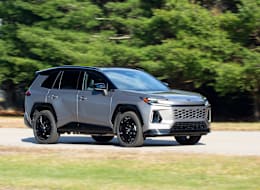
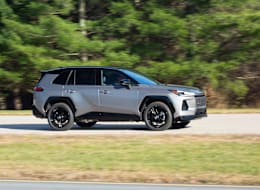
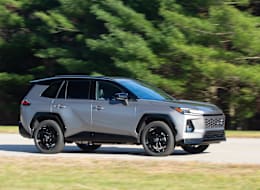
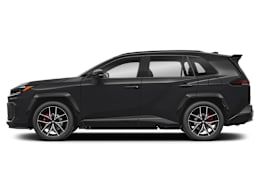
    The powertrain for the plug-in hybrid electric vehicle (PHEV) version of the RAV4 gained 22 hp for 2026, raising its combined output to 324 hp. Previously, the PHEV (formerly known as Prime) was available in two grades. This year, there are four versions: the outdoorsy Woodland and street-scoundrel GR Sport join the SE and XSE. Each PHEV is AWD. (Buyer beware that the GR Sport comes with summer tires.)

    The new RAV4 PHEV’s electric-only range (before the gasoline engine must come on) has increased from an EPA-estimated 42 miles for the 2025 model to 48 and even 52 miles for the 2026 model, depending on the configuration. That’s one of the longest electric-only ranges of any current PHEV.

    The RAV4 is the brand’s first vehicle with Toyota Safety Sense 4.0, the latest version of its suite of active safety and driver assistance technology. Most importantly, blind spot warning (BSW) and rear cross traffic warning (RCTW) are now standard across the board.

    Like other models, the RAV4 comes with ToyotaCare, a plan that covers factory-recommended services for two years or 25,000 miles. As before, the PHEV represents the height of the RAV4 line.

    For early access to the newest version, Toyota lent Consumer Reports a PHEV XSE. When the new RAV4 arrives in dealerships, we will anonymously purchase one to test.

    The RAV4 PHEV competes with the Ford Escape PHEV, Hyundai Tucson PHEV, Kia Sportage PHEV, Mazda CX70 PHEV, Mitsubishi Outlander PHEV, and the Nissan Rogue PHEV.

    The final assembly point is Japan.

    Impressions

    What We Like

    Hybrid power

    Performance is again a virtue, with the new PHEV boasting 22 more horsepower than before. In a small SUV from a mainstream brand, the combined 324 hp is impressive. In electric mode, acceleration is quick, smooth, and quiet. Toyota said that once the battery is depleted, horsepower in hybrid mode drops by about 20 percent. Still, that leaves roughly 260 horsepower on tap, which is more than enough for eager response. In regular driving, the dip in performance isn’t noticeable. Even when you want to squirt into traffic, most drivers seldom go wide-open throttle. For its class, power is a standout and among the key draws to this version.

    Sport mode

    The ability to dial in sportier performance at the press of a button has become fairly common. With the RAV4 PHEV, this function is executed well, with an immediate improvement in throttle and steering feel just a button press away. With many vehicles, Sport mode is a guilty pleasure that amps up the frenetic nature of the powerplant, while causing fuel economy to tumble. With such an efficient machine, the well-implemented personality change is a guiltless pleasure.

    Range

    Another key buying factor is the tremendous 52-mile electric-only range in the SE and XSE. The prior PHEV had an impressive 42-mile range. (The GR Sport PHEV has a 48-mile range.) Adding another 10 miles with this latest generation is frankly incredible. It is more than enough to satisfy the daily needs for most drivers. For those who can conveniently charge overnight, the RAV4 PHEV could be used quite regularly on electric, with the gasoline engine available to extend road trips up to 575 miles or more before refueling or charging. (Toyota-estimated fuel economy is 41 mpg combined for the XSE, 37 mpg for GR Sport, and 38 mpg for Woodland.)

    The charging setup varies based on trim. The SE and GR Sport use a 7-kilowatt onboard charger with a J1772 charging port. The Woodland and XSE have a faster 11-kW onboard charger and a CCS port that allows for DC fast charging. Toyota says their battery can be charged from 10 to 80 percent in about 30 minutes on a DC fast charger, whereas at-home Level 2 charging will be closer to four hours.

    Ride

    The ride quality is quite good for a small SUV on 20-inch wheels. It is as comfortable as any other model in its class, offering a nice balance of firmness for sporty driving, yet sufficient compliance and isolation to maintain a calm cabin experience. Most drivers felt that no harsh impacts pound through to the interior, and it appropriately softened road surface aberrations. A couple of our test drivers thought the wheels did transmit unwanted feedback on some roads, however, possibly exacerbated by the 20-inch wheels. Initial experiences on different routes can lead to varied observations. We’ll watch this closely in our formal testing, which uses a specific route on public roads and a specially engineered portion of our track for suspension evaluations. Overall, we are eager to see how a RAV4 with 18- or 19-inch wheels rides, as a taller sidewall often brings further isolation, albeit potentially at the expense of handling.

    Handling

    During our initial drives, the RAV4 PHEV impressed most drivers with its handling for the class. Steering has an appropriate weight to it with a hint of feedback to communicate to the driver. Body roll is kept in check, and it is very easy to control your lane position on the highway with the good on-center response. It held the road well when pushed much harder than the typical driver would ever experience. Normal mode has rather light, lazy steering that may satisfy most drivers. Sport mode increases steering effort and feel, making it more engaging.

    Noise

    The RAV4 PHEV is rather quiet for the class in electric mode. When the engine kicks in, testers heard and even felt it through a slight vibration in the accelerator pedal. It is less intrusive than the previous generation RAV4, a testament to powertrain advances that have increased the amount of electric assist, so the engine isn’t as taxed. Wind and road noise are present, though typical for a small SUV.

    Front access

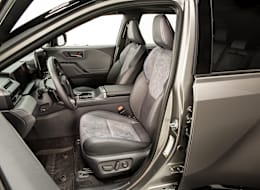
    Most drivers found access to be easy, noting the tall entryway, narrow door sills, and minimal step-in height. A couple of larger drivers found that entry required a practiced approach angle to duck in and dodge the sloped windshield pillar.

    Control access

    Every control is in easy reach. That seems like a low bar for praise, but that functionality isn’t to be taken for granted these days. Even with a large center screen, all controls are within grasp for most drivers. Plus, physical buttons and knobs for common functions provide a welcomed balance for controls.

    Clever touches

    The front center console lid opens to the left and right—a brilliant and convenient bit of engineering. (We’d like more padding on top, though.) Another neat feature is that when changing “Drive Mode,” it not only changes the screen, using color to denote Sport versus Normal, but it also provides a brief explanation on the main screen, teaching the driver about the change. This may not be necessary after the first week, but it is handy the first few times. 

    Built-in dash cam

    With the rise of aftermarket dash cams, it is great to see Toyota take advantage of its vehicles’ existing suites of cameras to provide similar functionality. The RAV4 uses external front, rear, and panoramic cameras (when equipped) to provide continuous recording on a 90-minute loop. The recording can be controlled manually and be activated by impacts. Should something notable happen that you want to immortalize on social media or report to your insurance company, the video file can be transferred via USB.

    What We Don't Like

    Driver’s space

    The RAV4 boxes the driver in with its intrusive center console and firm armrests. Several CR drivers noted that their right knee rubs on the center console. Interestingly, there is a separate, hard plastic piece attached to the side of the console that could be readily exchanged for a softer material.

    Fit and finish

    The cabin has a trucky aesthetic, more akin to the 4Runner, Tacoma, and Sequoia, than more family-focused small SUVs or even the Highlander. This means many bold rectangular and hard plastics, making it look quite industrial and functional, rather than coddling and premium. For the money, a few soft surfaces and contrasting trim elements would be expected.

    What We'll Keep an Eye On

    Front seats

    The bucket seats in the XSE look great, with leather-like bolsters, cloth centers, and blue accent stitching. However, the comfort assessment varied among the drivers. Some found the seat to be flat and firm, with one person noting that the seat base was a bit short for adequate thigh support. The lumbar adjustments help dial in the right support. (Fortunately, all PHEVs come with some form of lumbar adjustment, although seating materials and features do otherwise vary by trim.) The driver’s seat in the XSE conveniently motors back when parked, aiding egress.

    Infotainment system

    This new system looks more modern than some other Toyota vehicles, but initial feedback among CR drivers was mixed. In general, it is easier to use than last year’s version. It’s both better laid out than before and faster to respond. Drivers liked the dedicated home screen and found that voice commands were executed quickly. However, some drivers noted that phone pairing could be hit or miss when using an Android (sometimes the phone would be connected only via Bluetooth), and the new tile-based infotainment screen has a learning curve. With additional seat time, we’ll see how pairing works with more phones and determine if the team adjusts to how the next-generation entertainment center operates.

    Everyday usability

    We like the mix of physical and touchscreen controls, and we like the traditional steering wheel buttons, stalks, window switches, and mirror adjustments. The physical climate buttons for temperature and defrost are small but welcomed. Other climate adjustments are made on the screen, but at least they appear right above the physical buttons.

    Driving this in cold weather, we appreciated that the XSE is fitted with heated seats and a heated steering wheel. However, the touchscreen buttons for them aren’t ideal. You touch the icon, then get a little pop-up window for making an adjustment. Simple is always better, but as cars layer in more sophisticated features, many functions that were once just a glance and touch, like adjusting fan speed, now require two steps.

    There are some physical buttons around the lower center console, which make a nice first impression until you realize almost none are things you need regularly, if ever. The most useful button there is Drive Mode, though our drivers also appreciated a button to select hybrid operation, cycling through hybrid, electric, and automatic.

    The new monostable gear selector, which protrudes from the center console like an upright pack of gum, is simple to use and space-efficient.

    Navigating through the instrument panel menus requires practice, frustrating some drivers who had spent just a day or two in the SUV.

    We appreciate the ample storage space for small items, located right under the front center screen. Unlike in some rival SUVs, there is no problem stowing a couple phones, snacks, and drinks all at the same time.

    Packaging

    The new RAV4 retains the dimensions of the popular previous generation. This means the interior packaging should be familiar to the millions of current owners and their passengers. Consequently, larger occupants may find the driver’s compartment to be a bit snug, access (especially to the rear seat) to be a challenge, and rear legroom to be merely adequate. None of these elements are a surprise for a vehicle of this size, but incremental growth from some competitors means current owners who crave a hint more space will either have to move up to a Highlander or shop at another dealership.

    Rear access

    The second row benefits from the same tall door and easy step-in virtues as the front. However, larger passengers again found it a bit more challenging due to the narrow footpath and the limitation on how wide the doors open.

    Back seat

    There is good headroom for the second row, despite the moonroof in our vehicle. The seat shape is different than in the front. Some felt the seat base was too low, lacking underthigh support. Feelings were mixed on the seat back, with a couple finding it more comfortable than the front seats. Legroom is fine, but quite dependent on the position of the front seats. The overall space is less than that of some competitors, most notably the Honda CR-V.

    Cargo space

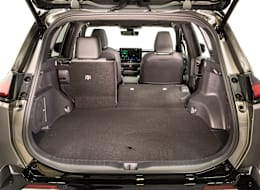
    The overall function of the rear cargo space is limited by the sloped rear hatch. The floor has a slight tilt toward the hatch, making it a bit exciting when unloading after grocery shopping, as round items in plastic bags can escape as the hatch is raised. The rear seats do not fold flat, hindering the ability to accommodate some large items.

    It’s nice that there is a 120-volt outlet in the rear, and we appreciate the space-saver spare tire located under the floor.

    Visibility

    The outward view is fine, but there are some restrictions. The windshield is sloped back for aerodynamics, limiting the vertical height to look through. However, the windshield pillars are relatively thin, and there is space to see around the door-mounted side mirrors. The side windows are a bit small, and thick rear pillars limit over-the-shoulder visibility. Most drivers will consider it adequate, but models like the CR-V and Subaru Forester are better.

    Safety and Driver Assistance Systems

    The new RAV4 is the first Toyota model to feature the Toyota Safety Sense 4.0 suite of active safety and driver assistance features, which utilizes the Arene software platform. It promises to be a significant step forward over the TSS 2.5 in the outgoing model. 

    Toyota explains that the latest suite is an advance over the TSS 3.0 in other vehicles, thanks to improved sensors, among other things. TSS 4.0 includes the latest versions of automatic emergency braking with pedestrian detection, lane departure warning, lane keeping assistance, adaptive cruise control, and automatic high beams. In addition, they have standard BSW, RCTW, and a safe exit assist system, which monitors for passing vehicles before it allows passengers to open the doors when parked, for example, on a city street.

    Remote Connect enables the owner to interact with the vehicle through a phone app, allowing functions such as remote start and remote lock/unlock. This comes with a one-year trial subscription.

    Safe Connect services include emergency assistance, roadside assistance, automatic crash notification, and stolen vehicle locator. Service Connect issues personalized maintenance updates and vehicle health reports. These connected features are covered by five-year trial subscriptions, after which time owners would need to pay to continue the services.

    Change Vehicle